Culross sits on one of the richest stretches of shoreline in central Scotland. The mudflats and saltmarsh along this part of the Forth, including Torry Bay Local Nature Reserve between Culross and Torryburn, feed wading birds and wildfowl through the winter, and the Fife Coastal Path carries walkers past them all year. Behind the shore are hedgerows, field margins, old walled gardens and woodland edges that most of us drive past without a second thought.
For a small business, nature can feel like somebody else’s job: something for councils, charities and landowners with hundreds of acres. In practice, the shops, cafés, workshops, holiday lets, trades firms and offices of West Fife manage a surprising amount of ground between them. Yards, verges, car parks, roofs, planters, back gardens and the routes vans travel every day all add up. This guide sets out practical, low-cost steps any local business can take, and how to talk about them honestly.
Start with what you already manage
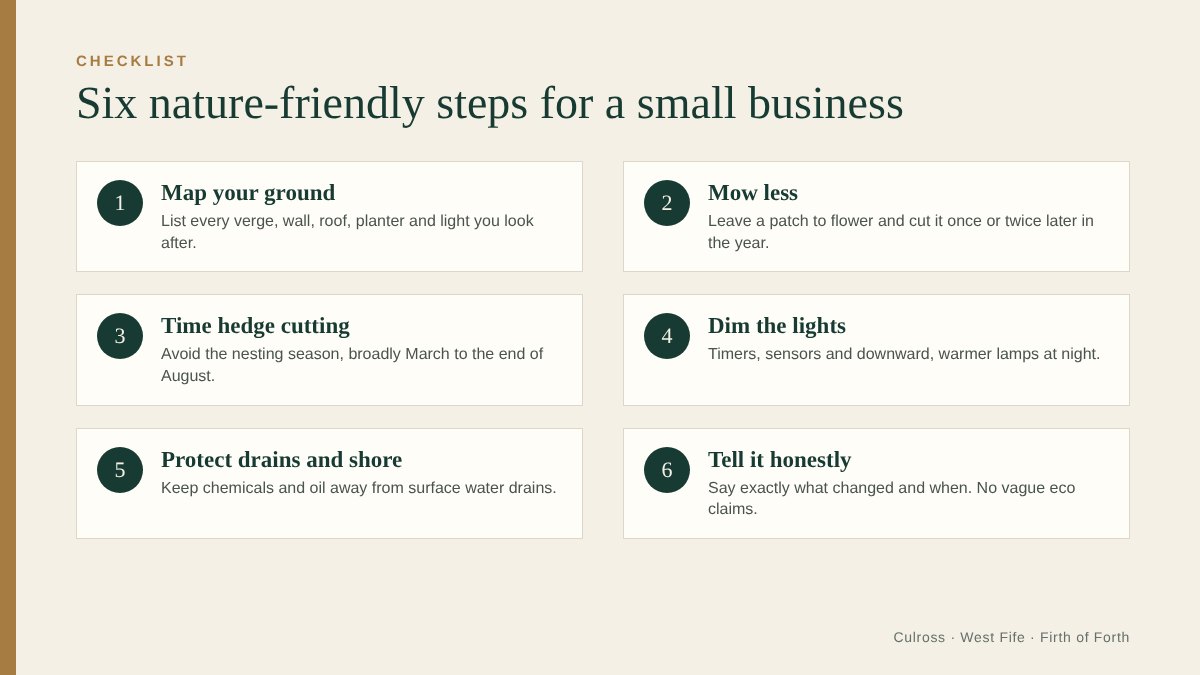
Before buying anything, walk round your premises and write down every bit of ground, wall, roof and boundary you are responsible for. Include the strip of grass by the car park, the bins area, the hanging baskets and the back fence. Then note what happens to each one now: how often it is mown or strimmed, whether it is sprayed, when hedges are cut and what lights are left on overnight.
That simple list is the foundation for everything else. Most nature-friendly changes are about doing a little less, or doing the same job at a different time, rather than spending money. It also gives you an honest record of what you have changed, which matters later if you decide to tell customers about it.
Mow less and let some ground flower
Short, frequently cut grass looks tidy but offers little to insects. Leaving a section to grow longer through spring and summer, and cutting it once or twice later in the year, gives native plants such as clover, buttercups and knapweed a chance to flower. Those flowers support bees, hoverflies and butterflies, which in turn feed birds.
A neat mown edge along paths and beside the entrance shows customers the longer grass is deliberate rather than neglected. A small sign explaining what you are doing helps too, and often starts friendly conversations. If you have planters or baskets, choose a mix that includes single-flowered, pollinator-friendly plants and use peat-free compost, since peatlands are among Scotland’s most important habitats.
Time hedge cutting around nesting birds
Hedges, shrubs and ivy-covered walls are valuable shelter on business premises. Wild birds, their nests and eggs are protected by law, and the general advice is to avoid cutting hedges and trees during the main nesting season, broadly from March to the end of August. Check before any work at other times too, because some birds nest early or late.
If you use a contractor, agree the timing in writing and ask them to cut on a rotation, so not every hedge is trimmed in the same year. Late winter cutting leaves berries in place through autumn, when they are an important food source. Allowing a hedge to grow a little taller and wider than before can make a real difference with no extra cost.
Think about light at night
Security and display lighting is often left on all night out of habit. Artificial light can disrupt insects and the bats that feed on them, and all bat species in the UK are legally protected. Around the coast, bright lighting can also affect birds.
Simple changes help: fit motion sensors to security lights, use timers on signs and window displays, point fittings downwards and choose warmer-coloured lamps. These changes usually cut electricity costs as well, which makes them an easy case to put to a landlord or business partner.
Look after water and the shore
Everything that goes down outdoor drains can end up in burns and, eventually, the Forth. Make sure staff know which drains are for surface water only, keep cleaning chemicals, paint and oil well away from them, and have a small spill kit if you handle fuels or chemicals. A water butt on a downpipe gives you free water for planters and reduces runoff during heavy rain.
For businesses that serve walkers and visitors, such as cafés, guest houses and activity providers, a gentle reminder about keeping dogs under control near feeding birds in winter, and taking litter home, is a helpful service in its own right. Point people towards the guidance published by NatureScot and by the Fife Coast and Countryside Trust, which looks after the coastal path, rather than writing your own rules.
Waste, deliveries and everyday buying
Businesses in Scotland are already required to separate key recyclables, and food businesses have additional duties for food waste. Going a step further is often about buying less in the first place: refillable cleaning products, fewer single-use items, and suppliers who collect and reuse packaging.
Deliveries and van journeys are another place to look. Grouping jobs by area, sharing deliveries with neighbouring businesses and buying from producers within West Fife where it makes sense all reduce mileage. They also keep money circulating locally, which is part of what a regional directory like this one exists to support.
Tell customers, but keep it honest
Once you have made changes, it is natural to want to mention them. Customers increasingly care about this, and a short, specific note on your website, social media or menu can be genuinely interesting. The key word is specific. “We stopped spraying the car park verge and now cut it twice a year” is clear and checkable. “We are an eco-friendly business” is vague, and the Competition and Markets Authority’s Green Claims Code expects environmental claims to be truthful, clear and backed up by evidence.
Speaking as a team who build websites for small Scottish businesses, the most useful thing we see owners do is add a short, plain-English page or paragraph describing what they actually changed and when, with a photograph or two of the result. It reads well, it is easy to keep up to date, and it avoids the generic badges and slogans that customers have learned to ignore. Update it once a year, and remove anything that no longer applies.
Join in with what is already happening
You do not have to do this alone. Local community groups, conservation volunteers and ranger services across Fife organise beach cleans, planting days and wildlife surveys. Offering staff time, lending a van, providing refreshments for volunteers or simply sharing event details with your customers are all useful contributions that do not depend on owning land.
Neighbouring businesses can also work together. A row of shops agreeing on planters with pollinator-friendly plants, or several firms sharing a single waste collection, can achieve more than each acting separately. Conversations like these are exactly the kind of local connection this directory is here to encourage.
A simple plan for the year ahead
If you only do a few things this year, start here. In winter, map your ground and lighting and plan any hedge work before March. In spring, pick one patch of grass to leave longer and fit a timer or sensor to at least one light. In summer, review waste and deliveries. In autumn, write a short honest note about what changed and share it with customers.
None of this requires specialist knowledge or a large budget. It requires a little attention to the ground you already look after, and that is something every business around Culross and the Forth can give.
This guide was written for the directory by Crowstep Digital, a small Stirling team whose day job is websites and local search for independent firms. They suggested this topic because so many of the businesses they work with sit right on the edge of Scotland’s countryside and coast.
Category: Business & Nature · Tags: Biodiversity, Firth of Forth, Pollinators, Sustainable business, West Fife